
SBR Technology & Decanters
Sequencing Batch Reactor systems for flexible, high-quality wastewater treatment in a compact footprint — with floating decanters for precise, solids-free treated water withdrawal at the end of each cycle
Overview
About SBR Technology & Decanters
The Sequencing Batch Reactor (SBR) is a fill-and-draw activated sludge system that operates in time-based cycles (typically 4-8 hour cycles) rather than using separate tanks for each treatment stage. All biological treatment, settling, and decanting occur in a single reactor vessel, reducing footprint by 40-60% compared to conventional continuous-flow systems while achieving superior effluent quality (BOD/COD removal >95%, ammonia removal >90%, phosphorus removal >80%).
SBR technology operates through five distinct, programmable stages: Fill (30-50% of cycle time), React (30-40% with aeration), Settle (15-25% quiescent settling), Decant (5-10% effluent removal), and Idle (sludge wasting and preparation). This sequencing allows complete nitrification-denitrification and biological phosphorus removal in a single tank by alternating aerobic, anoxic, and anaerobic conditions. Typical volumetric loading rates of 0.3-0.6 kg BOD/m³/day with MLSS concentrations of 3,000-5,000 mg/L ensure robust treatment performance.
This batch-wise approach provides exceptional operational flexibility, allowing operators to easily adjust cycle times (from 3 to 12 hours), aeration intensity, and fill patterns to accommodate varying influent loads (handling 2-3x design flow surges), seasonal variations, and changing effluent standards without physical modifications. Energy consumption typically ranges from 0.6-1.2 kWh/m³ treated, with 20-30% lower operational costs than conventional activated sludge systems due to the elimination of return sludge pumping and separate clarifiers.
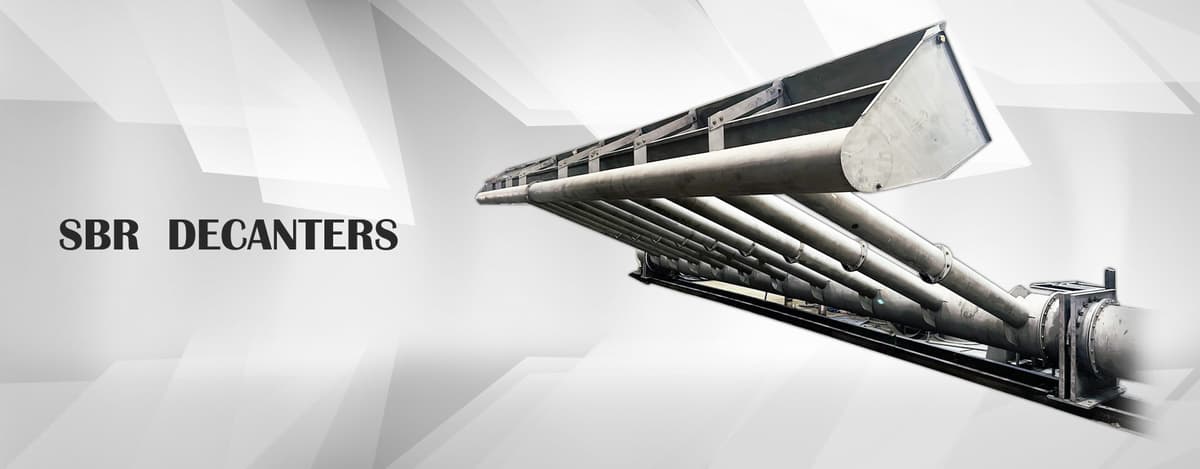
The decanter is the critical final element of the SBR cycle. A floating or adjustable arm decanter rises and falls with the water level during the Decant phase, withdrawing clarified treated water from just below the surface — well above the settled sludge blanket at the tank bottom. This floating action ensures the decanter inlet remains at the optimal position relative to the sludge-water interface regardless of the actual treated volume being withdrawn in each cycle. Decanters are fabricated in stainless steel (SS304 or SS316) to resist corrosion in the biologically active SBR environment and are designed for fully automated operation via the plant's PLC system. Properly sized decanters with appropriate inlet velocities and scum barriers prevent solids carry-over even when decanting is performed rapidly at the end of a short cycle.
Process
How SBR Technology Works
Fill
Wastewater is introduced into the reactor basin. Filling can occur under static, mixed, or aerated conditions depending on treatment objectives.
React
Biological treatment takes place through controlled aeration and mixing, enabling BOD removal, nitrification, and denitrification.
Settle
Aeration and mixing are stopped, allowing activated sludge to settle under quiescent conditions for effective solid-liquid separation.
Decant
Clarified supernatant is withdrawn from the reactor using a floating or adjustable decanter mechanism.
Idle
A rest period for sludge wasting and system adjustments before the next cycle begins. This phase provides operational flexibility.
Benefits
Key Advantages
- Flexible operation with adjustable cycle times to handle varying loads
- Lower capital cost compared to conventional continuous-flow systems
- High-quality effluent meeting stringent discharge standards
- Compact footprint — all treatment occurs in a single tank
- No separate secondary clarifier required
- Excellent performance in biological nutrient removal
- Simple automation and process control
- Well-suited for phased capacity expansion
Applications
Industries & Use Cases
Explore More
Related Products
Get a Quote or Technical Consultation
Our engineers can help you select the right sbr technology & decanters configuration for your application.